
Gay men are notoriously hard to please because, whether consciously or not, we have high standards, if not impossibly so. This trickles down to how we consume arts and media, fields that gay men are traditionally invested and thrive in. As such, if there’s anything that I’ve gleaned from the public discourse on Heated Rivalry, it’s that gay men can so often be — or in fact, prefer to be — their own worst enemy.
Critical Views of Heated Rivalry‘s Place in Queer Media
Jordan Firstman, fittingly enough, was the first offender. The core of his argument is valid: yes, openly gay actors would have perhaps added more weight to Ilya Rozanov and Shane Hollander, the show’s two leads, stunningly embodied by up-and-coming actors Connor Storrie and Hudson Williams. But as Kristen Stewart accurately puts it, it’s a slippery slope. A more sustainable solution is to create an ecosystem where actors, regardless of their skin color, sexual orientation, or gender identity and expression, are provided with a level playing field to succeed. A tall order it may be, but attainable all the same.
Beyond the quantifiable metrics, Heated Rivalry’s cultural chokehold is unprecedented for a Canadian series, especially in the streaming age with same-sex relationships as its nucleus and in the midst of the male loneliness epidemic.
Over a decade earlier, HBO, the same network that acquired Heated Rivalry for streaming in the US, premiered Looking, which chronicled the lives of a group of gay friends in San Francisco. Gay writers took umbrage with how boring it was, a harsh critique which made some sense since Queer as Folk had been the main reference point for gay television in America in all of its fast-paced, unabashedly sexually explicit nature. Looking, in comparison, was a slow-burner: gay sex was present but it also reveled in static and space, a decidedly more European arthouse affair thanks in part to its British director/executive producer Andrew Haigh, then best known for his 2011 gay romance all-timer Weekend. Ratings were low, with each episode drawing upward of 500,000 viewers; the series was cancelled after two seasons and capped off by a feature film in 2016.
The overarching socio-political climate was strongly at play: Looking came out on the cusp of marriage equality and not long after Don’t Ask, Don’t Tell was repealed. The Obama years were a time of (p)optimism and excessive, maximalist tendencies. Concurrently, mainstream gay representation was made through the likes of Glee and Modern Family whose gay characters read as chaste and caricature-like. Frustration among gay millennials, Looking’s main target audience, was palpable and to some degree understandable: where’s the zest, the chutzpah, the subversiveness?
In Looking, the very qualities that had characterized the gay liberation movement were seemingly sanded off in favor of respectability politics. Some factions of the gay populace were rightfully agitated, succinctly worded by John Sherman in his pointed review of the 2018 gay teen rom-com Love, Simon, who deduced that the double-edged sword of normalcy-as-value is that “it is always including and excluding with the same stroke.”
Coincidentally, 2018 was also the year that Rachel Reid published the first of the Game Changers series. Inspired by her anger and frustration at homophobia in hockey culture, the similarly-named novel would go on to become the emotional backbone of Heated Rivalry, whose book version came out the following year.
Personal correlations are easily found in the main protagonists: in Rozanov’s frail sense of belonging resulting from toxic, co-dependent family dynamic and immigration woes; in Hollander’s quiet, unassuming resilience despite his many inner turmoils and anxieties, especially in his goal to be the perfect, high-achieving son; in Scott Hunter’s (François Arnaud) fear of facing his longing for love and companionship; in Kip Grady’s (Robbie G.K.) wide-eyed innocence and working class struggles; and even in Elena Rygg’s (Nadine Bhabha) feisty, no-bullshit attitude … and the fact that she delivered the series’ thesis statement. Caroline Siede says it best in her outstanding piece: the series has some of the meatiest character work on television. “Part of the reason people have gone so feral for the show’s last two episodes in particular is because they deliver the rare, beautiful rom-com magic of watching two people inspire each other to become better versions of themselves,” writes Siede.
It’s precisely the penultimate episode that sealed the deal for me: it finds Rozanov confessing his love for Hollander in Russian — after his father’s funeral to boot — and Hunter coming out very publicly by kissing Grady on the ice, set to Wolf Parade’s classic “I’ll Believe in Anything,” the episode’s namesake. It’s not just the four actors’ performances or song placement that does the trick; it’s the camera work, the emotional arc crafted throughout, and the cinematic build-up as the song plays progressively louder, more primal and urgent as Hunter brings Grady to the ice and declares their love to the world. A testament to how integral music can be to a scene — the series is chock full of excellent music selections featuring Canadian indie darlings of the 2000s and 2010s — it’s without a doubt the apex of the first season (or really, of television in recent years). Cue the Busy Philipps reaction video.
Never Leaving “The Cottage“
Director/screenwriter/showrunner Jacob Tierney has described Season 1, Episode 5 as the proudest moment of his career and his way of giving people the type of moment that “you don’t get when you’re a gay kid.”
I thought about how, 20 years prior, the most prominent slice of gay cinema was Brokeback Mountain, a pirated copy of which I hastily procured in secret as a closeted gay teen. While beautifully made, the main message it seemed to send out to me was “it’s sad, but at least it’s beautiful.” When this type of messaging is reinforced across a litany of gay cinema that followed and became culturally vaunted (yes, even Weekend), queer men are subsequently prone to believing that all we ever deserve is sadness. A gay or queer existence is only worthy, it seems, when it’s tear-inducing tragedy, angsty self-loathing, or grandiose sentimentality, mostly covered in darkness, be it in clubs, bars, alleyways or bedrooms, anywhere the walls are up and the lights are out.
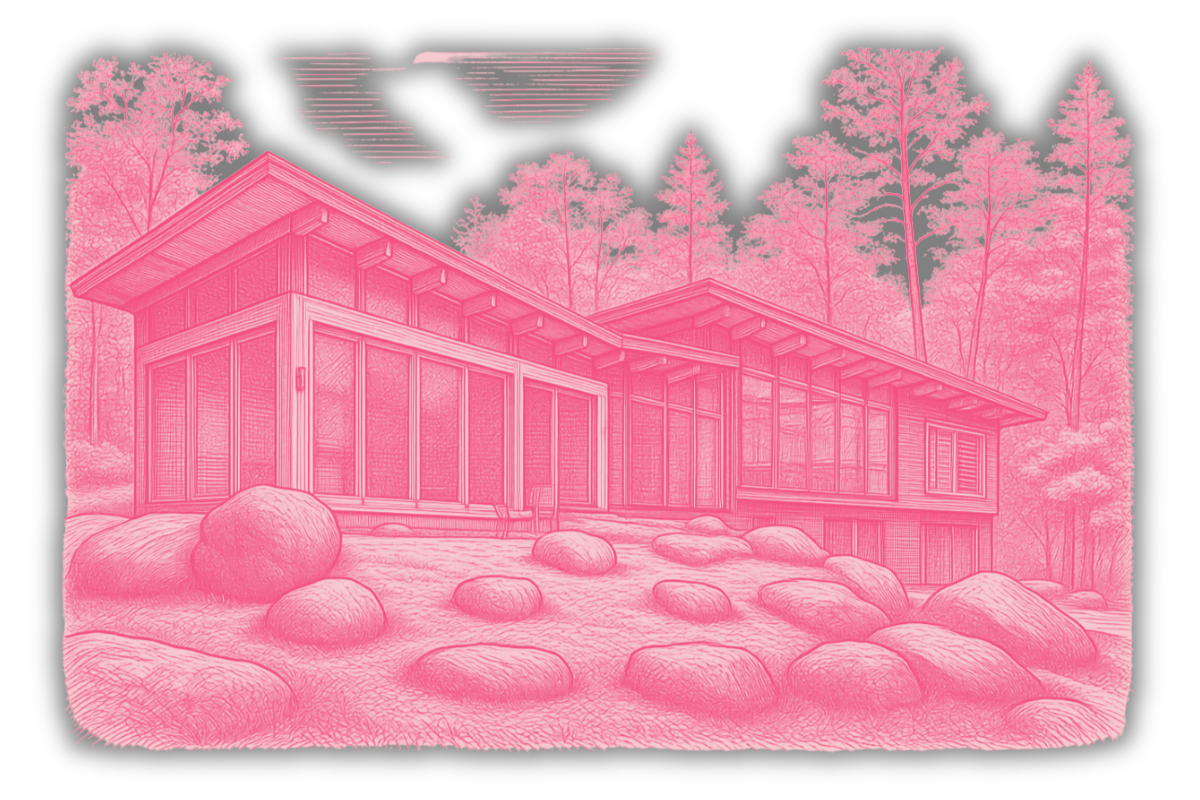
But there Rozanov and Hollander are in episode six, aptly titled “The Cottage,” basking in each other’s company and bodies in uncharted ways. In the titular sanctuary, they have unhurried sex with the windows open in broad daylight, make lunch together, frolic in nature like little boys, have a heart-to-heart in front of a campfire, and plan a joint future, each small — or boring, as per Rozanov’s go-to one-liner for Hollander — moment sparking a new sense of wonder, as if bewilderedly pondering, “Why did we deprive ourselves of this for so long?” It remains fairly rare to see an on-screen gay couple in domestic, life-building mode. The last instance I could think of was Shameless’ Ian Gallagher and Mickey Milkovich in a nearly decade-long storyline which, while exhilaratingly gritty, was equally rife with physical and verbal violence (Milkovich had literal bruises in his eye on the pair’s wedding day).
I was reminded of how, growing up gay in the 2000s, I became accustomed to the notion that being gay had no future. This became internalized as I came of age and navigated dating and relationships in modern-day Jakarta, where being closeted remains the norm. The Hunter/Grady-focused third episode, then, was a sobering call-back to years of dealing with closeted guys, a stark contrast to how I walked hand-in-hand and engaged in a streetside lip-lock with my boyfriend after our first date, small-yet-big moments I was deprived of in my formative years.
For all the progressiveness suggested by social media, the real world is not yet post-queer, especially in sports, a field traditionally perceived to epitomize peak masculinity. Under Tierney’s direction, a gay man with a deep, lived-in understanding of the complexities that underpin the queer male experience, Heated Rivalry is no mere rom-com fluff or non-stop sex romp it’s often made out to be; it beats and bursts with a genuine, cracked-open-and-busting-loose heart, the kind of earnest sincerity that many queer men shy away from — or find “icky” and “cringe,” to borrow Zoomer lingo. All it makes is a simple proposal: your past may have been dark and traumatic, but do you dare to step into light and welcome joy for your future’s sake?
In his 2013 essay, Ryan O’Connell writes that many gay men have copped to struggling with loneliness, feeling desirable, and a general fear of commitment “even though we might say we want a boyfriend.” This certainly rings true in the Hollanov storyline: it takes the two nearly a decade — the first season covers the time period between their initial encounter in 2008 all the way through 2017 — to finally admit their love for each other, and that’s only after encouragement from the women in their lives, Hollander’s movie star ex Rose Landry (Sophie Nélisse) and Rozanov’s friend-with-benefits Svetlana (Ksenia Daniela Kharlamova). Even then, they’re not entirely set on the logistics of their now official relationship.
Hudson Williams himself doesn’t see “The Cottage” as a happy ending. “They’re still in the closet. They’re not coming out to Reebok, they’re not coming out to anyone. They got caught. It looks more like forgiveness than pride. […] Forgiveness implies there’s something that was wrongfully done,” he remarks, in reference to a particularly poignant scene in which Hollander comes out to his mother, Yuna (Christina Chang), essentially apologizing for not trying harder not to be gay; in an extremely rare Asian parent moment, she apologizes back for making him feel like he couldn’t tell her.
Nevertheless, “The Cottage” marks the act of bearing witness to one another, of taking the leap of faith not frequently shown on screen or practiced in real life by two men in love. Ultimately, Heated Rivalry holds up a mirror to its characters and viewers alike: you are seen. You are safe in your desires. You can exhale now.
Joy In A Bleak World: Heated Rivalry Is Anti-Dystopian
Stories like this are cathartic, even healing. As a viewer, it matters less to me that the main actors are largely White and conventionally attractive — actors are paid to look good and they portray athletes here — and more the fact that these characters and storylines provoke a strong emotional resonance in me as a gay man, as an Asian, as an immigrant, and just as someone who loves hard.
The culture has shifted dramatically since Looking: works of art are becoming more somber and dystopian parallel to the rise of Trumpism, people are going back in the closet, monoculture is declared dead. On the flipside, it’s exactly the democracy afforded via social media that has made Heated Rivalry a true-blue word-of-mouth phenomenon: now you have scene analyses, soundtrack deep dives, and countless Twitter threads on character developments, callback scenes, cinematography marvels, and directorial choices, among others. People are wholeheartedly invested out of their own volition.
When all is said and done, though, there’s a quality to this phenomenon that feels organic and life-affirming. In its wake, straight men are reacting with both cheer and verklempt, while athletes are coming out, retiring from retirement, or reflecting upon their own experience in the closet. That’s an entirely new threshold of progress. We have pushed the limits of identity-based politics and the perceived sense of freedom it entails … then what? As the culture continues to zig and zag in the age of fascism, Heated Rivalry is what happens when there’s no more game to play, the stripping down to our collective yearning for connection and hope. In other words, it’s anti-dystopian. It makes us want to love again.
***
On the day of “The Cottage,” I was in my boyfriend’s apartment, having just spent Christmas together. My first Christmas with a boyfriend. The best Christmas of my life. I woke up mid-day, just shortly after the episode dropped. “Morning, babe. We’re watching that hockey show you told me about?” he inquired as I waltzed into the living room. The sun made him look extra handsome. I nodded and joined him on the couch, pulling him into my arm as he pressed play. Sunlight poured in from the blinds. I kissed his head, glanced at the window, and thought to myself, “I guess I deserve sunshine, too.”