
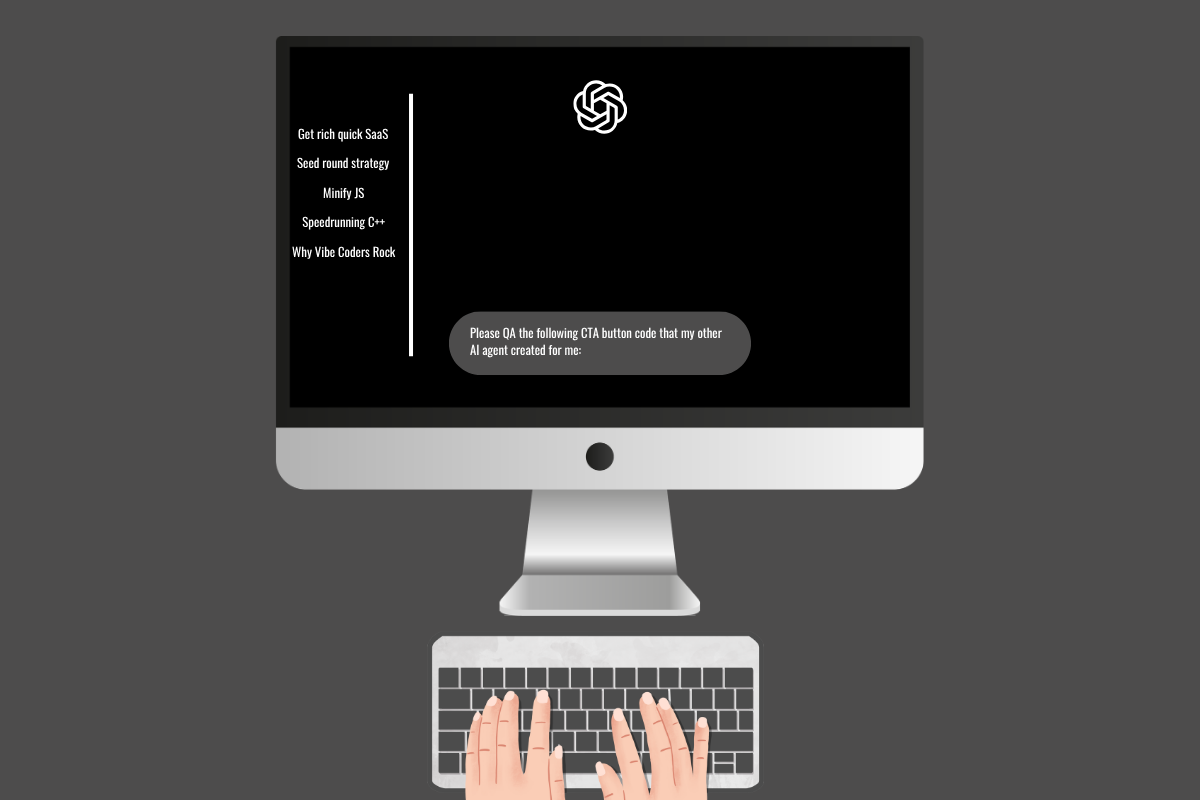
“I know how to make the sausage, but I don’t know how the sausage is made.”
Feedback from the microphone echoes around the room. The hum of the crowd comes to a quiet. “Thanks for waiting everybody, welcome to our first hackathon,” the host chimes, “our teams have been working hard over the past 24 hours. We’ll start presentations shortly.”
This format is typical for a hackathon: bring a bunch of people together, create teams, and keep them in a room to work for 24 hours or more on an app or website that aligns with the theme of the hackathon. A sleepover meets a scrum sprint.
The first team shuffles to the front of the room. A team of four. College-aged. They’ve assembled an app that helps businesses keep track of their finances. I’m zoning out. There’s another team preparing to present beside me near the back of the room. As they’re watching the presentation, one of the team members is frantically telling the other to make sure specific features are added to their project. Curiosity peaked, I ask to see what they’re working on and they show me.
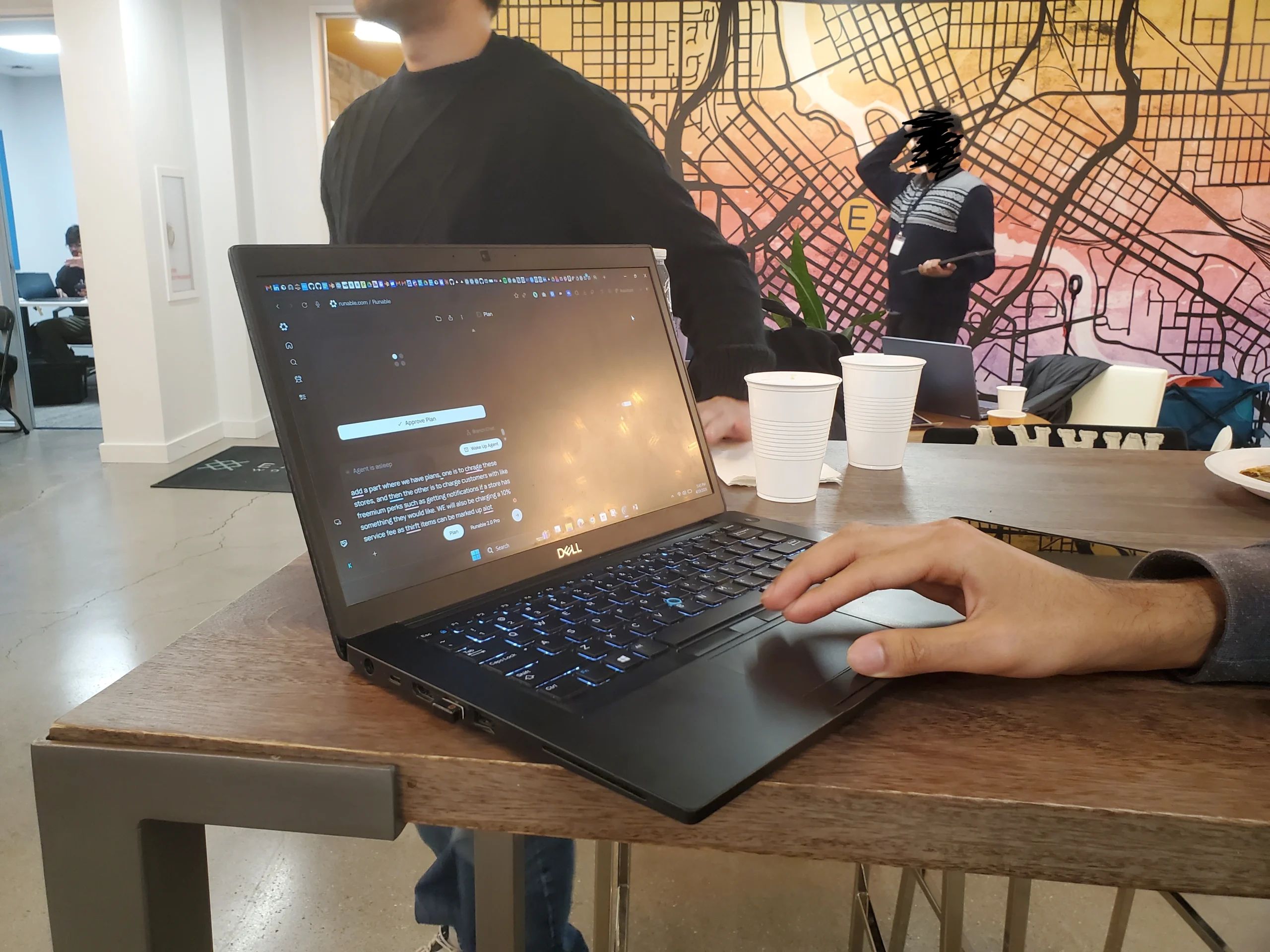
Ah, yes. Feed for the slop. I’m immediately reminded of another event where a slop slinger said in a presentation about their vibe-coding journey, “I know how to make the sausage, but I don’t know how the sausage is made.” The plight of the vibe coder. I can only assume the other teams have amplified their creative output with AI tools. The results are undeniable, if not banal, but at what cost?
What’s So Bad About a Vibe Coding Future?
The fervor to implement AI is subsidized by the wealthiest among us in a “noble” effort to bring AI to the masses, and yet, among the many issues with AI, we see inequality on the horizon. A class of haves and have nots is being created by this vibe coding phenomenon. In the words of a friend in tech, Web 3.0 will look like “skyscrapers and favelas.” People who can afford to use the tools will be better off for it, and those who can’t will be at a disadvantage.
Cory Doctorow’s term, “enshittification,” gets to the heart of the matter. AI tools were introduced with heavily reduced rates and the aim of locking users in. These companies will increase their rates and reduce the quality of service. We see a reduction in quality with the introduction of ads into AI experiences along with a greater degree of surveillance.
While the cost per token has gone down with model and process optimization, the cost to users increases as more use cases are discovered: instead of processing a single PDF, we’re feeding the contents of entire businesses into AI platforms; rather than turning to a newly discovered SaaS product, we’re developing our own stack with the assistance of AI. We’re developing muscle memory and dependence as we inject AI into our lives and forget what we used to know.
Trading Creativity For Output, No Matter The Cost
Take websites as an example. Talk to most elder millennials and Gen Xers and they’ll have a story about how they added custom CSS to their MySpace page or how they applied custom code they found on a forum to their GeoCities website. While coding was difficult then, it was still the thing to do, to be cool, to keep up with your friends — anybody could do it because they had to. Saying you couldn’t code was like saying you couldn’t cook because you can’t make Beef Wellington. We developed a rigid idea of what’s possible on the Web and subscribed to the mythology that we can only engage with the Web through specific tools and methods.
In some cases, like with SEO, these limitations fundamentally shape our experience with the Web. An HTML header tag to the uninitiated is a way to modulate text size without using CSS or inline styles. To a marketing professional, a well-placed header tag is make or break between showing up on the first page of Google search results and being unsearchable. In this case, design choices and artistic intent are molded by loose, yet well-understood and accepted “regulations.”
These informal regulations are perpetuated by generative AI tools and web builders who dutifully assemble your website so you can focus on your business. They take care of SEO. They handle the JavaScript. They all look the same with slight differences (see Google’s recent presentation on using generative AI to create apps).
The mythology becomes more complex when AI tools start to deliver outsized results, like an entire finance management app for a hackathon created through a series of sentences that act as parameters for the project, or prompts. Natural language prompts have abstracted the process of coding and building digital artifacts and infrastructure into a space where the computer understands us more than we understand it.
Abstraction in coding refers to the layering of a different language onto the original language, meaning your input is being translated into a language the computer can organize and interpret. Greater degrees of abstraction bring us further away from the source. Abstraction in the age of AI moves programming into the realm of not needing to know the language a computer speaks at all.
There will come a time when your average vibe coder can no longer afford the output of AI they expect. This reality will leave vibe coders seeking the fundamentals: documentation, forums, understanding your code. The digital “skyscrapers” will be occupied by those who can afford to use the newest and shiniest models, while the “favelas” will be handmade, vibrant, and scrappy.
The haves may seem to be those in the skyscrapers, but their loss is in the lack of opportunity to truly understand what it takes to communicate in another language and understand those you are in conversation with. We’ve been convinced that these tools for translating our intent will be perpetually available, but it’s easy to imagine what life would be like if they were taken away.
***
The hackathon felt like a Roman banquet: a celebration of excess in defiance of a better use case. Like a dance troupe or an alley of clowns, the vibe coders provided ample entertainment. While the audience gazed upon their work in admiration, I couldn’t help but feel a dissonance between the intention of such an event alongside the execution. The results are undeniable, but Chuck D’s words kept running through my mind: “What you gonna do when the grid go down?”