
As someone who has always felt a bit like a walking billboard for dissension, I’ve never shied away from directly engaging with conflict. My identities have always required nuance, never quite fitting in clear boxes or definitions. I learned early in life that ambiguity makes people uncomfortable and even angry. So, managing conflict never bothered me much…until the rise of Trump.
What “Alternative Facts” Have Done to US Citizens
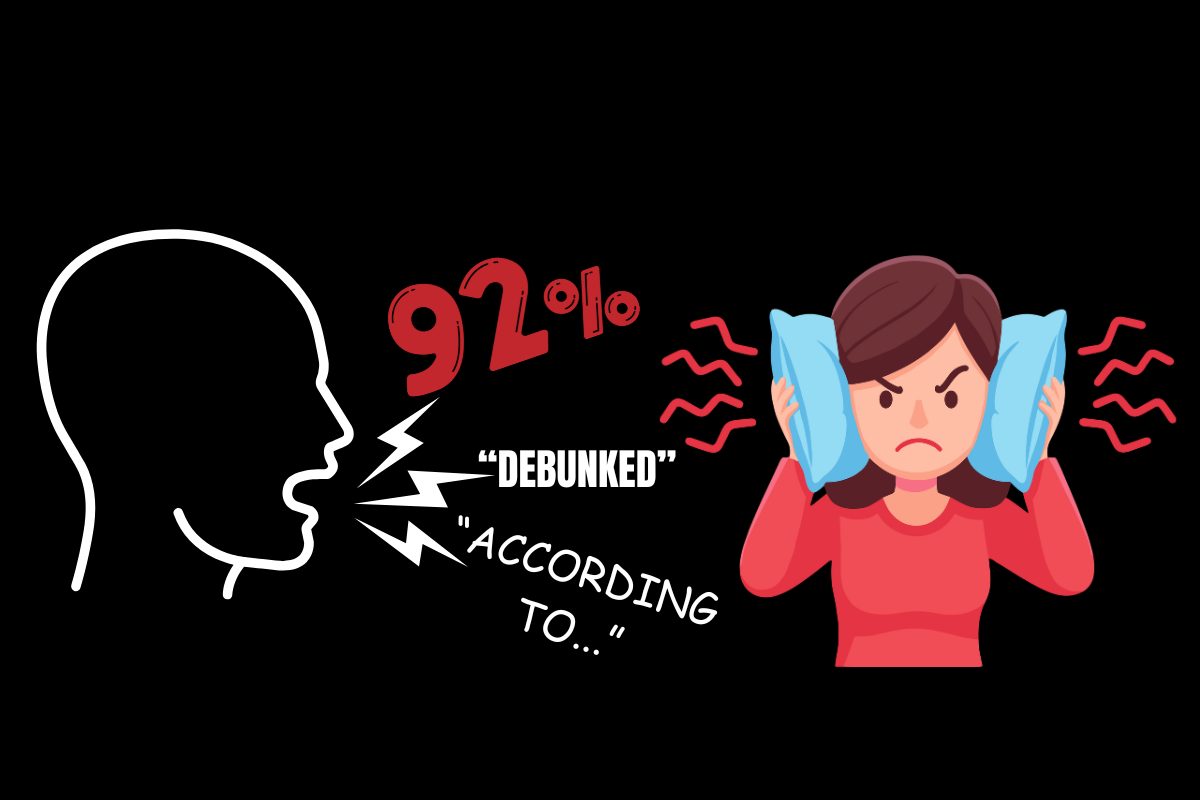
One of many new terms gifted to us by the Trump administration is “alternative facts,” a set of largely unverified or undeveloped claims on a subject that directly counter the stance or story a person refuses to believe in. Those utilizing alternative facts believe that to be a truly free thinker means you do your own research through the caverns of the internet until you’ve compiled your own set of statements to bolster your beliefs. Remember the folks who drank bleach during the beginning of the COVID pandemic? These folks will ignore science and rigorously studied and proven data to demonstrate their free thinking abilities — refusing to believe what “they” want us to believe.
So how do you talk to someone working with alternative facts? When the president says “fake news” to any piece of information that contradicts his statements, where can the conversation go? How do we maintain the ability to discern the truth when curriculum, books, historical artifacts, etc. are being removed from public access? What is the path forward when all truth is subjective? What do we do when the ‘alternative facts’ are rapidly changing to maintain power and erase well-documented facts?
Critical Discourse Theory Helps Us Understand How We Talk To Each Other
In critical discourse theory, discourse is defined as language which shapes and is shaped by society, power, and ideologies. I use this definition because it is crucial to understand how important language is in constructing our daily realities.
In the past, we engaged with people believing that there were core facts we almost all agreed with or believed to be true. Of course there were people who disagreed (hey, flat-Earthers!), but scientific evidence and/or dominant discourse helped us discern outlier theories from sound realities. Shared reality helps us navigate our days whether it’s understanding the chaos of a Costco gas line or getting on and off a crowded flight.
One of the best examples of the power of discourse is racial identity as we understand it in the United States. Race is a social construct, not a biological fact. Our current classifications of race started with a shift in language. As the language was written into laws, taught in schools, added to forms, depicted in media, etc., racial categories solidified. This language shaped the broader discourse about race in our country — leading to biases, inequities, and constant violence.
Now there is no denying the reality of race-based discrimination in this country…unless the discourse is challenged by alternative facts. For the last decade, fundamental truths like, “slavery was bad and racist” have been challenged, and a new discourse is beginning to take its place which tells us that slavery wasn’t so bad. In fact, it was useful! In the same way race was formed in this country by writing it into laws, literature, art and more, discrimination is being redefined in real time.
We have to look at these new narratives through a critical lens and situate them in the appropriate contexts, and we have to do it knowing there is high risk for conflict. So what do we do? How can people, regardless of party affiliation, who value honesty and integrity seek meaningful exchanges that lead to resolution? I don’t know.
When We Can’t Agree On The Facts
When we encounter conflict, it’s incredibly useful to find common ground to build a compromise or identify a resolution.
For example, if you’re waiting to get off the plane after a long flight, and someone comes zipping forward from the back of the plane, you’re probably pissed. We have unspoken rules for how we all get off the plane! You could assume the person is being rude and confront them only to find out they have a connecting flight to get to their sibling’s wedding on time that they absolutely can’t miss. Perhaps this triggers some empathy, but even if it doesn’t, we can use evidence to build a case that it’s more urgent for that person to get off the plane than for you to get off simply because you’re in front of them.
But what happens when we don’t agree on the facts? How do facts change when power influences our discourse? Use the airplane scenario as a case study. If you layer gender, race, class, etc. onto the identities of each person, how might it play out differently? Consider the fact that the people who often control discourse are the ones with the most resources, access, influence, or, in short, power.
Since 2016, the dial on the intensity meter for interpersonal conflicts has been quaking in the red–threatening to shatter the meter’s glass entirely since George Floyd’s murder in 2020. People have cut off family and friends, lost their jobs for posting online, and even road rage incidents involving guns are up by over 400%. Now with Alex Pretti’s public execution in Minneapolis, I am left questioning the utility of conflict mediation skills. We may not be able to communicate our way out of this, because if we can’t rely on verbal compromises or nuanced discussions that illuminate our shared beliefs and/or experiences, we are left with limited options to move toward resolution.
Burying our head in the sand and avoiding conflict isn’t an option. It’s urgent. It’s immediate. It’s in our face the moment we open our phones. We should all be very activated right now because the truth is being rewritten every day.
The best thing I can think of is for us to get off the Internet and get in the streets. Talk to people. Have real conversations about difficult things, and preserve histories and knowledge. There is no reasoning with someone committed to alternative facts. No argument will be strong enough for someone who believes data is made up. Our energy is better spent bolstering the discourse those folks are trying to change and/or erase and fighting to keep our connection to each other.
The time to lean into compromise and mediation is done. We have to let go of ideas like incremental progress and scaled approaches as it relates to human rights and civil liberties. It’s time to be uncompromising and fervent in our commitment. Shit, it may even be time to fight.