
What is the Male Loneliness Epidemic?
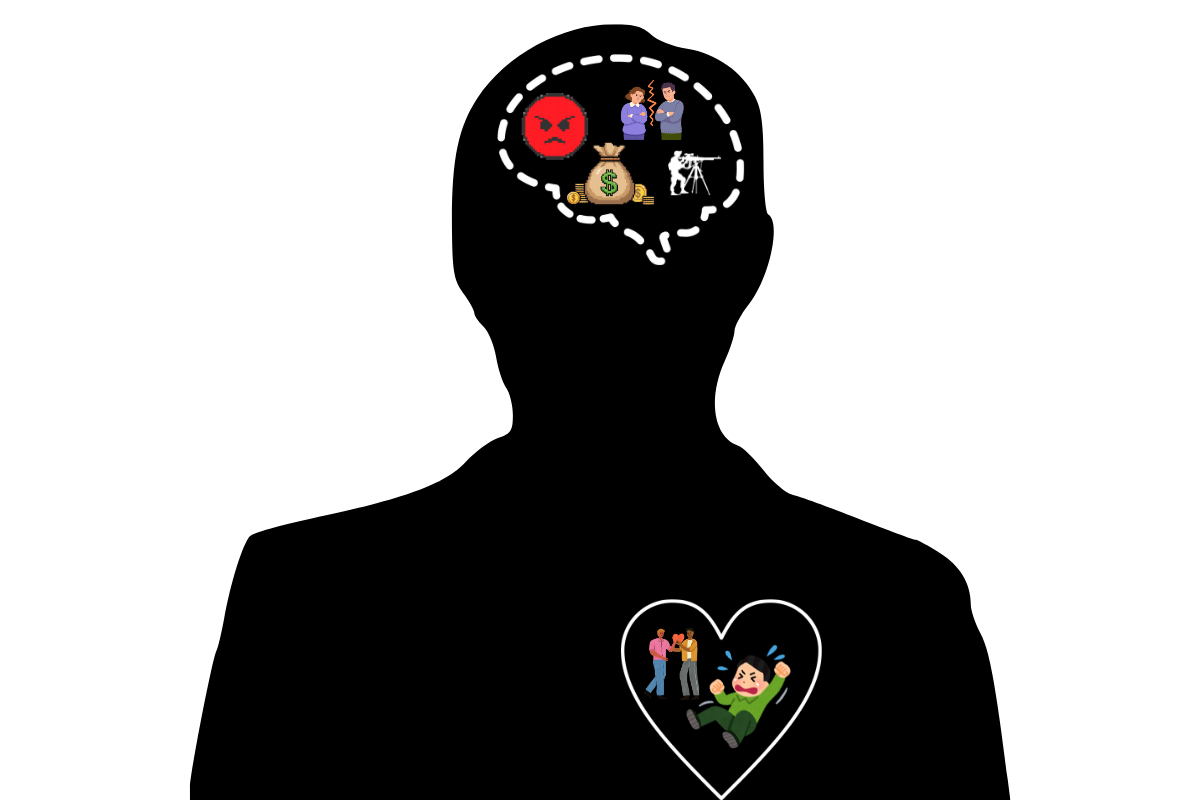
For the better part of the 2020s, “male loneliness epidemic” has permeated public consciousness beyond its online origin. Characterized by a lack of intimate friendships, emotional repression, and higher suicide rates than women, the long-term trend of poor socioemotional health in men also frequently sparks questions on whether it is an actual phenomenon or a self-inflicted psychosis. The reality of it, as realities tend to be, lies in the delicate line between and beyond the two.
What is Causing the Male Loneliness Epidemic?
In an illuminating interview for The Sun Magazine, Richard Reeves posited that men have been “on the sharp end of a mixture of educational, social, and cultural changes,” adding that the problems that men face today are not largely about exclusion or oppression. However Reeves, the founder and president of the American Institute for Boys and Men (AIBM), also noted that the Left has shown unwillingness to confront the current problems of men because of its sense that men are the problem, a problem-free monolithic of some sort, which is, of course, a narrow and skewed way of viewing a diverse group of people.
More importantly, this “us-versus-them” narrative also neglects the fact that feminism, in essence, should benefit both women and men, both at a macro level (job opportunities, socioeconomic standing) and a micro level (self-perception, self-actualization), leading to improved relationships between and within both groups. Instead, the constant alienating leads to … well, further alienation, especially among men, who have been taught from the get-go to be an all-conquering, self-sufficing island.
Facts on Male Loneliness in the USA
- In a 2023 survey of Millennial and Gen Z men, Equimundo’s State of American Men report found that the majority of men surveyed not only agreed with the statement, “No one really knows me well,” but also that they only had one or two close friends that they were comfortable with confiding in outside their family.
- The American Perspective Survey’s 2021 report highlighted a stark difference in the degree to which men and women rely on friends for emotional support — 30 percent of men in the survey claiming to share personal feelings to a friend during the week as opposed to 48 percent of women.
More succinctly, Center For Discovery physician Kristen Fuller, M.D. underscored the tendency of male friendships being more transactional and activity-based, hence men’s proclivity to share their deepest and most secret feelings with a wife, girlfriend, sister, or other platonic female friends, hence the age-old myth that men = logical and women = emotional. Yeah, right. And how unfair is it that women are tasked with emotional labor for the men in their vicinity as if they do not already have their own to deal with?
Narrow Views of Masculinity
certain groups of women are excelling at unprecedented levels both in school and at work, leaving a substantial chunk of boys and men … seeking purpose and meaning as norms and values shift dramatically
In line with the previous finding, a Pew Research Center article from earlier this year pointed out how Americans say that all-female social groups have a positive impact on both women’s well-being and society compared to all-male groups (57 percent vs. 43 percent). This reminded me of what noted writer Ocean Vuong so succinctly stated on Late Night with Seth Meyers:
In this culture, we celebrate boys through the lexicon of violence: [..] “‘You’re killing it,’ ‘You’re making a killing,’ ‘Smash them,’ ‘Blow them up, ‘You went into that game guns blazing,’ and I think it’s worth it to ask the question what happens to our men and boys when the only way they can valuate themselves is through the lexicon of death and destruction? […] I think when they see themselves as only worthwhile when they are capable of destroying things, it’s inevitable that we arrive at a masculinity that is toxic.
As such, the 2015 documentary The Mask You Live In, which follows boys and young men as they grapple with staying authentic while being boxed in by America’s narrow definition of masculinity via media exposure, peer pressure, and lack of internal support system, remains achingly relevant in the age of Jordan Peterson and Andrew Tate.
More pointedly, anthropologist Treena Orchard, Ph.D. stressed in her piece for Psychology Today that while loneliness cannot, and should not, be determined by sex or gender, the male loneliness epidemic is a unique modern phenomenon that reflects a time where certain groups of women are excelling at unprecedented levels both in school and at work, leaving a substantial chunk of boys and men actively, if not desperately, seeking purpose and meaning as norms and values shift dramatically compared to the life-long indoctrination that has been programmed into them.
What is this indoctrination, you might ask? Competition over connection. Snobbery over vulnerability. Aggression over tenderness. You get the picture. But what happens when the entire premise of being a man — and indeed, masculinity — is essentially to not be like a woman? Sure enough, you get a group of people that routinely demonizes women and femininity while simultaneously craving proximity to (and ownership of) them. Do men even like women?
Male Loneliness = Repressed Bisexuality?
And that brings us to the next premise: is the male loneliness epidemic, in fact, nothing but a disguise for repressed bisexuality?
It’s not a far-fetched hot take, when you let it sink in. How many times have the men in your life bemoaned the minutiae of the women in their lives and proclaimed that they’re understood best by their bros? What about the times they came close to (or thought about) being with other men? It is, let it be known once and for all, regularly proven that homophobia is deeply intertwined with hidden homosexuality.
In a 2016 study conducted by Columbia’s Mailman School of Public Health with 821 ethnically-diverse adult male participants:
- 20.7% of self-identifying straight men claimed to watch male same-sex porn
- 7.5% of the men who identified as straight reported having sex with a man in the past 6 months
Regardless of major advances made in LGBTIQ rights, visibility, and representation in the 2010s and beyond, heteronormativity still prevails in society at large. Therefore, it’s no surprise that a lot of men, despite dabbling in varying degrees of homosexuality, would recoil at the mere idea of openly claiming an identity other than heterosexual. It seems to not even matter that technically speaking, bisexuality does entail some extent of heterosexuality. Rather than see it as an honest admission of who they actually are, their first impulse would usually be, “Oh no, I can’t be associated with that gay shit!”.
How would I know this? Because I’ve had first-hand experience, multiple times at that.
The last time this happened, it was a newly divorced guy who had just moved from Los Angeles — one of the gayest cities in America, mind you — to Philadelphia, an equally gay city with a whole neighborhood called … Gayborhood. Although repeatedly claiming to be straight at first, he came on to me, we briefly hooked up, he went from wanting to figure himself out and continue seeing me to freaking out over the fact that he actually liked me, conceded that he had never opened up with anyone quite like he did with me, and therefore saw a future with me.
“I can’t be gay, man,” he eventually proclaimed. “What would my family say?”
“You know bisexuality is a thing, right?” I replied.
That set him off.
“Look, dude, you need to stop. I like chicks and that’s where it’s at. If you continue to push it and especially if I see you in person, this will not end well,” he retorted. “I’m a cool dude, but respect my boundaries. I am not someone you want issues with. Stop.”
We never really spoke again. So much for getting a place together as he had hinted at. My bad for developing feelings for a cool “straight” guy.
I often think about author Mike Iamele’s moving piece about falling in love with his best friend, whom he then went to marry, despite having identified as a heterosexual guy his entire life. I think about how beautiful and liberating it would be if heterosexual-identifying men were more embracing of their sexual and romantic fluidity rather than ardently adhere to the rigid trappings of (performative) masculinity and heteronormativity. I think about how life-affirming and life-changing it would be for men — and women, while we’re at it — if as a society we would just allow people to explore and live out the full scope of their humanity rather than judge them harshly for it.
I think about what if people would just let two guys have a romance instead of a bromance, an utterly loathsome term that okays male-on-male intimacy as long as it’s platonic. Again and again, society seems to prefer two men killing each other rather than love each other. Men can’t even get a sense of belonging, protection, and love from their own kind — and we wonder why they get so lonely.
***
The Need for Men to Redefine Manhood
Perhaps the most interesting takeaway from Richard Reeves’ interview in The Sun Magazine is how he agrees that masculinity is inherently more fragile than femininity given that it is more socially, rather than naturally, constructed. “It’s why cultures historically have worked very hard to turn boys into men with very clear markers and tests and rites of passage. Boys don’t become men by accident. The questioning of masculinity is almost a permanent condition. […] The challenge now is to move from deconstructing masculinity to reconstructing masculinity,” he astutely concluded.
So how do we reconstruct masculinity? While I do not claim to have a one-size-fits-all solution, for many years, I have maintained that men, regardless of their orientation, should exert tenets of feminism among themselves rather than use them to impress women or worse, take over women. One of the most crucial tenets, in my opinion, is to provide a safe space for men, where everyone is encouraged to express themselves, especially emotionally, listen to, reflect, and learn from one another.
This is, perhaps amusingly, in line with what Zohran Mamdani recently shared regarding the subject matter and how he correlated the male loneliness epidemic with larger systemic forces as things are “becoming more and more expensive for people to afford, and the connections between people are fraying” due to the lack of third spaces and constant pressure to one-up the increasingly stifling money game. And that’s precisely why, more than ever, we need to connect with one another, realize the error of our ways, and figure out a better path forward in how we define manhood and masculinity and live them out, independent of women.
In my relationships with men, too, among the most common behavioral patterns I have come to notice is the acute lack of self-reflection. At the risk of sounding generalistic, I presume that this stems from how it is often ingrained to the male psyche that they can be anything they want, go anywhere they want, and get anything and anyone they want; as such, they move in the world without a care … or make it seem like they do. And oftentimes, they do, at the cost of practicing self-reflection and fostering healthy relationships, least of all with themselves. So how deeply have you met yourself lately?